

Who are our friends?
Why bother with complicated people, from neighbors to colleagues to Bumble BFF
I was once the assistant of an older man who was eventually exiled for sexual harassing my replacement. Out of the many absurd things he said, the most insulting was when he said, with a purely genuine expression, that it was “pathetic” that I had met two of best friends in the world on a dating app.
Because I am an idiot who believes that the same energy source is within all of us, I actually devoted a lot of time to learning about this man and trying to wrap my head around his existence. I wasn’t a very good assistant (I quit after 8 months) but I, for a time, was a good friend to him. He was a contrarian who shared a little too much about his marriage. He was a man. He sniffled constantly, hated the summer, complained in the winter, tolerated autumn and I quit before spring. He got mad at the computer, particularly the keyboard. He was fluent in many languages and read ancient literature on his lunch break. He had many taglines and sayings, and shared stories about dating younger women. He abhorred clubs, groups, religions, and most ardently, flags. We planned a staff gathering around New Years at a Hibachi grill and rather than politely decline when invited, he informed us that he would “rather die.”
Some of you may be actually coming around to this guy at this point. And that, on top of my inherent beliefs about energy, was why I kind of adored him. Insulted constantly by his disapproval of almost everything, the first time I genuinely felt a stab of hurt was about the Bumble BFF comment. This is an absurd reaction not only because meeting friends on Bumble BFF is objectively laughable—friendship apps themselves being an uncanny interlude of our tech-addled society—but also because I was mentioning it for laughs. I wasn’t upset about being laughed at (playful ribbing I not only consider a love language, but absolutely essential to platonic love), I was insulted by being being pitied for my efforts to open myself up to love.
Let me back up and explain something about this as a value. For example, even though I have a flip phone, I go to great lengths to avoid shaming others for their phone usage. I would rather eat my Nokia 2780 (open face, or closed?) than make someone else feel pathetic for their objectively problematic, addictive, and dopamine-seeking phone behavior (there are plenty of people on here that’ll do that for you, if that’s your thing).
Pity rises up as a weapon for last resort when you are faced with someone intolerably acceptant of their condition. Pity should be reserved for people who don’t know how to attach a document to an email or refuse to go to therapy. I use these because they’re great examples of how pride and pity are linked. Pity is not an effective vehicle for change. In fact, at the point that feelings of pity come around, I would argue that you’re basically well past the point of sympathy for your subject, and have moved onto disapproving apathy. You no longer want to make someone understand; in pity, you want them to feel exiled.
In the case of my boss, I interpreted his pity as a way for him to safeguard the experiences around friendship he thought were pure. Or at least, more pure than mine were. It was intolerable for me to confidently describe the fraternal love I had found on a dating app, because it threatened his ideas of a true, or right way that connection should happen—IE, the ways that it had (or hadn’t…) happened to him.
That, or, witnessing my experience as the new or correct way made him feel old. It seemed that everything I did threw his own perception of his life into sharp comparisons. He had tenuous relationships with many friends, and seemed to be fairly isolated in his marriage and job, whereas was in my mid-20s, had lots of friends, had just gotten married and was optimistic about our workplace. When you’re feeling desperate, everything is low-hanging fruit.
I wrote in my last letter that we are inherently disarmed by those who are different than us. Was what I really meant that we are concerned that as options for ways of living expand for others, our choices will seem less valid? Does it throw into question whether our choices are choices at all?
Despite the insistency of human nature to disapprove of difference, this is hardly a way to explain for friendship. I’m sure my readers won’t be surprised when I say that some of my hardest friendship breakups have been with people who were very similar to me.
When Mick Jagger was asked in the early noughties what kept the Rolling Stones going for so long he replied, with reference to his love-him-but-hate-him relationship with Keith Richards, “friction, baby.”
Kinfolk, Issue 57, The Ties That Bind Us
I have to admit that I’ve never been on an online dating app. I always met potential lovers en plein air, usually when least expecting it. I mostly dated friends (Reader, I ruined the friendship) and coworkers. If it sounds messy, it was! Most of my love experiences before meeting J were characterized by yearning and regret. I had very little interest in dating seriously anyone that I met, even J at first, I was looking for romance, intensity and I often became bored when the other stopped playing the game, and laid their cards down.
Online dating seemed like skipping over the best part. As a storyteller, there’s nothing I loved more than that first moment, meeting someone new, with whom you had immediate physical chemistry or even the potential thereof. It was usually when they’d open their mouth that the complications would start. Why online date, and start with that bit?

When I first moved to Paris, I struggled humbly to make friends materialize out of nowhere. I hung out alone at cafes, looked around longingly for other young nannies in the courtyard of the private school my host kids went to, and hung out with the previous nanny’s best friend’s replacement. But there was no chemistry, what we had in common was too obvious, and there was no friction, baby. I met one or two neighboring au pairs I was very fond of, but one left Paris fairly quickly, and another was just too young. I was atypical as a 23-year old au pair, most others were 18 or 19, and this was their first time leaving home.
So I downloaded Bumble BFF, rapidly hiding it from my phone screen (I did have an iPhone at this time) and telling no one from home how, to quote my ex-boss, pathetic I’d become. I remember calling home, crying about how much I missed J, my new nephew, and everything else I left when I disappeared. Bumble BFF was my last hope, or I was probably going to call this whole embarrassing expedition into Europe off.
There were a few false starts, I matched with a girl who had a cool name and wanted to go to the opera with me, but we didn’t hit it off. I met a local, but it was kind of too sad that she was a local looking for friends on Bumble and we both knew it.
Then my luck changed, I started chatting with a girl who was also from Maine, but had lived in Paris for two years. I had met a match in my homesickness for this place, so we had to meet. She was a little older than me and definitely cooler, living in Paris with a girlfriend and attending the Sorbonne for a masters in art history. I mustered up the confidence for our first date on the Rue Princesse and the rest was history. She and I have been close ever since, and she was the one who helped me get the most influential job in my life, the editorial assistantship at Messy Nessy Chic.
But my very best bumble date went like this: I took the RER A out of Rueil Malmaison, where I first lived in Paris, to a brocante in the 14th. A be-fringed figure in a trenchcoat stepped out of the shadows to meet me. I said, timidly, are you amie? Earnestly pronouncing it as the French word for friend—rather than how it is actually pronounced, like Amy—to which she responded yes. And yes she was, she was my amie. She nervously recounted my first words to her in a different way during the speech she gave at my wedding. Instead, the punchline being her responding, I’m sorry, I can’t understand your accent. (She actually left that out of the final draft, but in my mind it was there.)
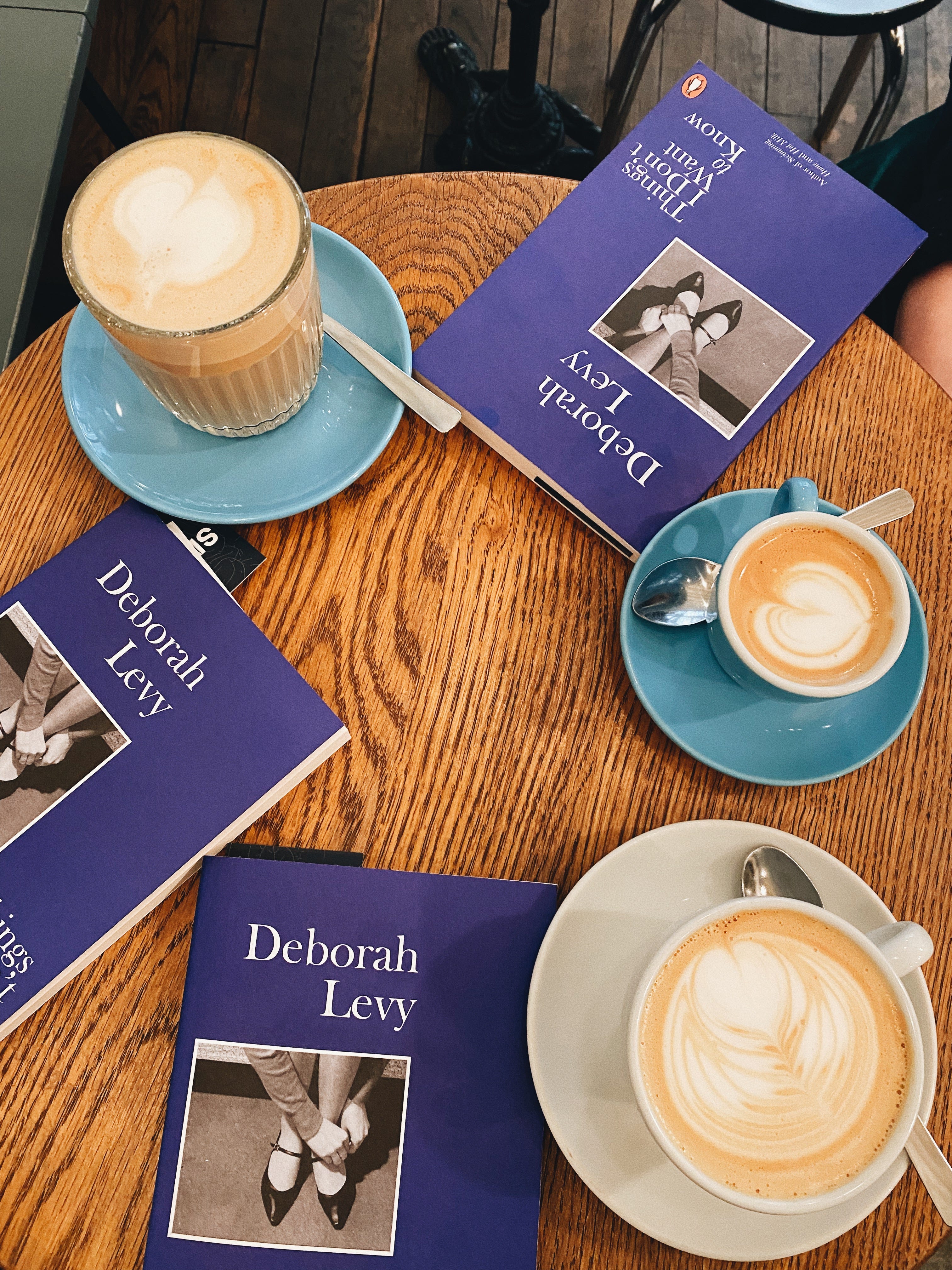
She introduced me to our brilliant third, Erin, and we started a book club. Since then, our life-sustaining connection, first over an app, then every single day before les enfants terrible got home from school, and now over an ocean, is what my ex-boss was referring to when he let loose his disdain.
Is someone you meet in an authentic, analog way more real as a friend than someone you meet through the internet? Or, was this never about the internet at all? Was this about him disappearing into middle age, along with his rites, rituals, and niche culture? Was this dig a way at preserving his youth, and was I, in some way, at fault for his aging? Or at the least, being reminded of aging—being forced back into the skin that he was obviously uncomfortable in?
It may have been how I code-switched on him—one minute, I was rapping about Sonic Youth like I’d even been alive early enough to do coke at the 1985 Gila Monster Jamboree, and the next, defending my honorary integration into the queer, Parisian au pair community via Bumble BFF. It may have seemed overwhelming, or even, like betrayal, that I could pass in his world with one foot firmly planted in my own as well.
Or was it simply that up until that point, I had existed as a pretty, young, blank reflective surface at which he could angle his nostalgia, and he never really knew anything about me at all? Being ripped out of his fantasy by my honesty was, yes, definitely betrayal.
This friendship (which, unsurprisingly, ended shortly after this conversation—by being more vulnerable and allowing myself to be hurt, I had lost my facade, and in that same faux pas, he perhaps had realized that I couldn’t be his perfect mirror; lovely, silent, and enduringly reflective) is confusing to me still. What was the point? Why bother with complicated, messy people who are too clever for their own good, who push boundaries, make insensitive comments, who don’t know what “gaslighting” is yet are masters of it, who speak of their unique delusions with such frankness that you realize they aren’t adhering to the same social code that neuters us all from true self-expression, as honorable or vile as it may be?
Well, at the least, they usually have great book recommendations.
my longest friendships are with online friends so i loved this piece!!
"Being ripped out of his fantasy by my honesty was, yes, definitely betrayal" ... absolute mic drop of a sentence.